
Every year amid India’s calendar full of festivals and observances there’s one day that quietly carries a powerful message the idea that unity matters more than our differences. Sadbhavana Diwas is that day. Observed every year on August 20, it’s dedicated to the spirit of goodwill, harmony and national integration. If you’ve ever wondered what this day truly represents why it’s celebrated and how you can be a part of it this point-wise guide covers everything you need to know
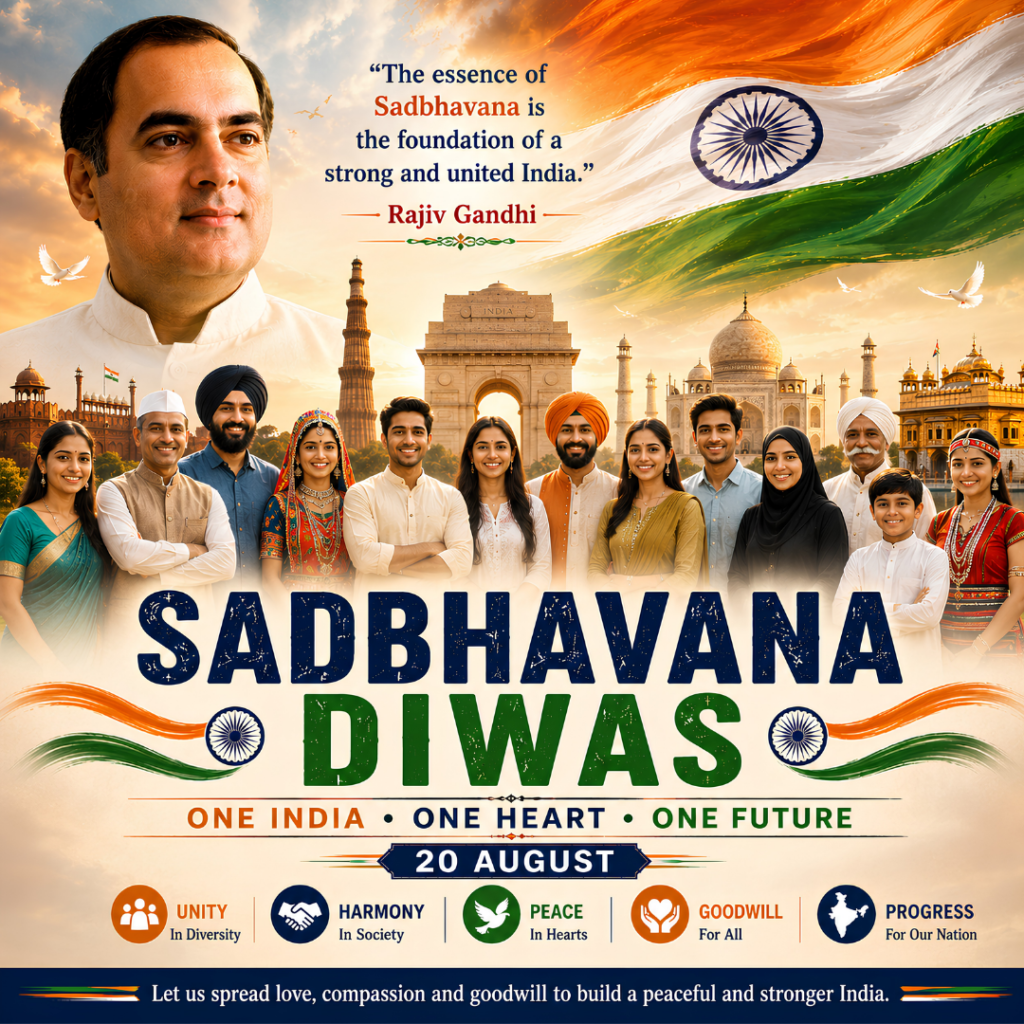
Table of Contents
What is Sadbhavana Diwas?
- Sadbhavana Diwas also known as Harmony Day or National Sadbhavana Diwas is observed every year on 20th August across India.
- The word “Sadbhavana” comes from Hindi/Sanskrit roots and translates to “goodwill” “harmony” or “bona fide feelings” toward others.
- The day marks the birth anniversary of Rajiv Gandhi India’s sixth and youngest Prime Minister who was born on August 20, 1944.
- In 2026, this observance marks his 82nd birth anniversary making it a significant year to reflect on his legacy and the values the day represents.
Why Sadbhavana Diwas Was Established
- The core purpose of Sadbhavana Diwas is to promote peace, communal harmony and emotional unity among people of different castes, religions, regions and languages across India.
- India being one of the most culturally and religiously diverse nations in the world has always needed reminders that unity in diversity is not just a phrase it’s a lived responsibility.
- Rajiv Gandhi, during his time as Prime Minister was known for pushing India toward modernization encouraging technological growth youth empowerment and stronger international relationships.
- This day was created as a tribute to his vision of an India where people set aside their differences and worked together for a shared future.
The Sadbhavana Diwas Pledge
One of the most meaningful traditions associated with this day is the Sadbhavana Diwas pledge, recited by citizens, students and government officials across the country:
- “I take this solemn pledge that I will work for the emotional oneness and harmony of all the people of India regardless of caste, region, religion or language.”
- “I further pledge that I shall resolve all differences among us through dialogue and constitutional means without resorting to violence.”
This pledge isn’t just a formality it’s a personal commitment that individuals make to uphold the values of tolerance and peaceful coexistence.
How Sadbhavana Diwas is Observed
- Wreath-laying ceremonies are held at Veer Bhoomi in Delhi the site where Rajiv Gandhi was cremated where family members and political leaders pay tribute.
- Cultural programs and competitions are organized in schools, colleges and community centers across various states to spread the message of unity.
- Many institutions conduct essay writing, debate and speech competitions centered around themes of harmony, national integration and communal peace.
- The day also carries an environmental angle tree plantation drives, greenery conservation efforts and awareness programs about protecting natural resources are commonly organized.
- Some events include cake-cutting ceremonies symbolizing unity along with public gatherings that reaffirm the pledge of harmony.
The Environmental Connection to Sadbhavana Diwas
- Interestingly Sadbhavana Diwas isn’t limited to social and communal harmony alone it also emphasizes harmony with nature.
- Citizens are encouraged to participate in planting saplings, conserving greenery and protecting biodiversity as part of the day’s broader message.
- This dual focus social unity and environmental responsibility reflects a more complete idea of “goodwill ” extending beyond just human relationships to our relationship with the planet.
Why Sadbhavana Diwas Still Matters in 2026
- In a time when social media often amplifies division rather than dialogue a day dedicated to goodwill and harmony feels more relevant than ever.
- It serves as a reminder that differences in religion, language or region should never become barriers to living together peacefully.
- The day encourages people especially the youth to think critically about how they can contribute to a more united and understanding society.
- For students preparing for competitive exams like UPSC or state civil services understanding Sadbhavana Diwas also offers insight into India’s secular values and post-independence political history.
Ideas to Observe Sadbhavana Diwas Meaningfully
- Take the Sadbhavana pledge yourself, even informally and reflect on what unity means to you personally.
- Have a conversation with someone from a different cultural or religious background genuine dialogue is at the heart of what this day represents.
- Organize or participate in a small tree-planting activity in your neighborhood or workplace.
- Share a social media post highlighting the importance of communal harmony using the day as an opportunity to spread positivity rather than division.
- Encourage children and students to learn about Rajiv Gandhi’s contributions to modern India beyond just political history.
Support or attend local community events that bring together people from different walks of life.
A Quick Look at Rajiv Gandhi’s Legacy
- Rajiv Gandhi became Prime Minister of India in 1984 taking office at a challenging time following his mother Indira Gandhi’s assassination.
- His tenure is often remembered for efforts toward modernizing India’s economy promoting information technology and telecommunications and encouraging youth participation in nation-building.
- He was posthumously honored with the Bharat Ratna India’s highest civilian award recognizing his contributions to the country.
- His vision for a united forward-looking India continues to be the driving idea behind why Sadbhavana Diwas is observed each year.
Final Thoughts
Sadbhavana Diwas may not come with the fireworks, flags or festive noise of some of India’s bigger celebrations but its message is arguably just as important perhaps even more so in today’s world. It asks something simple yet profound of every citizen to choose dialogue over division, and unity over discord. As August 20 approaches each year it’s worth pausing for a moment to genuinely reflect on what harmony means in our own lives within our families, communities and the country as a whole.
This year, as India observes Sadbhavana Diwas 2026, let it be more than just a date on the calendar. Let it be a small personal reminder that goodwill when practiced consistently has the power to hold a diverse nation together.

Hi I am Vishal Das an Content Creator and blogger created Multiple Website and working as blogger from last 2 years Right Now Working on the website . I have Completed my Schooling from St Xavier’s School Delhi and completed my Graduation from Distance Learning. Please do Join My Facebook page and pinterest Account.