
They’re small they’re silent and they’re responsible for more human deaths every year than almost any other creature on Earth. Yes we’re talking about mosquitoes. Every year the world observes World Mosquito Day on 20th August to raise awareness about the diseases these tiny insects spread and the importance of prevention.
Whether you live in a bustling Indian city dealing with monsoon season dengue out break or in the United States facing a rise in West Nile Virus cases this day matter to everyone. Here’s a complete breakdown of what World Mosquito Day is all about.
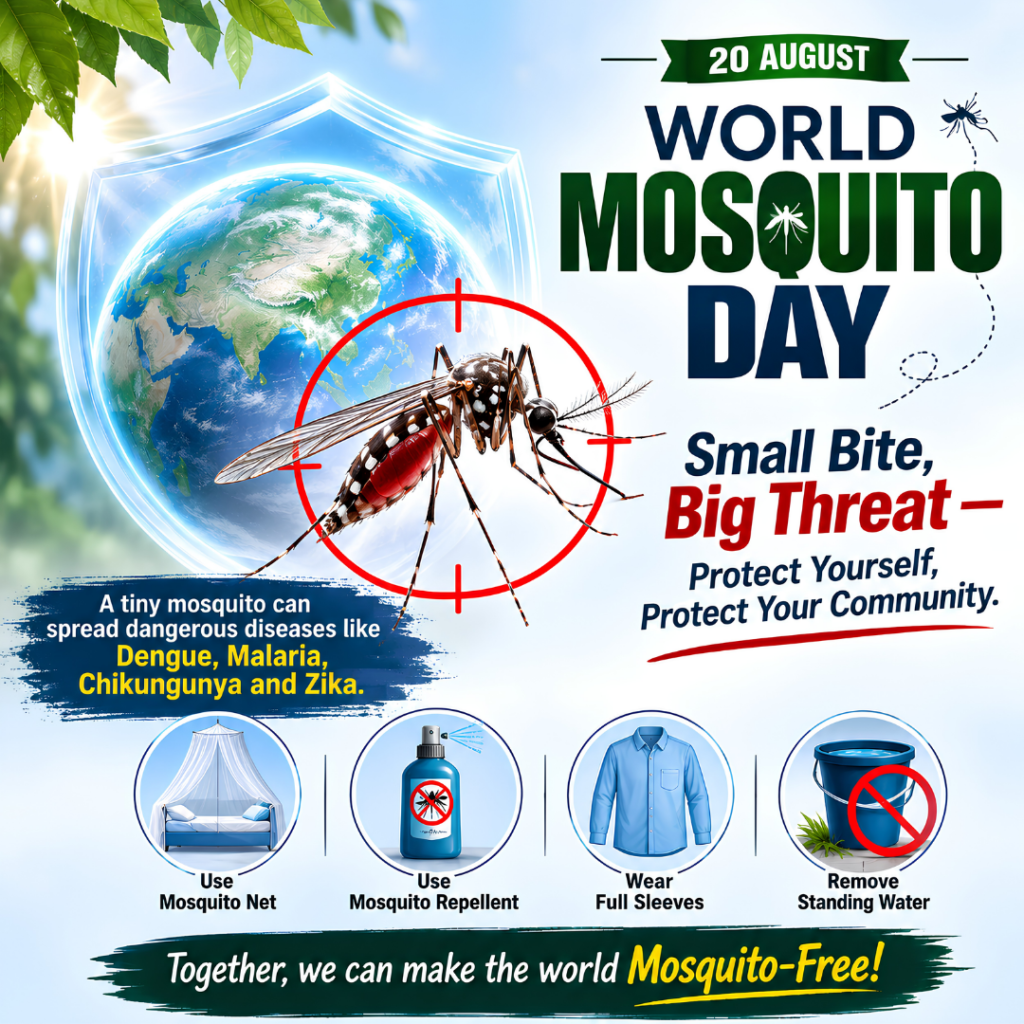
Table of Contents
What Is World Mosquito Day?
- World Mosquito Day is observed every year on August 20th.
- It commemorates the discovery made by British doctor Sir Ronald Ross in 1897 who found that female Anopheles mosquitoes transmit malaria between humans.
- This groundbreaking discovery earned Ross the Nobel Prize in Medicine in 1902.
- The day is dedicated to raising global awareness about mosquito-borne diseases and promoting prevention efforts worldwide.
Why World Mosquito Day Was Created
- Before Ross’s discovery the exact cause of malaria transmission was unknown leading to countless preventable deaths.
- His research paved the way for modern mosquito control methods and malaria prevention strategies.
- The day serves as a tribute to this scientific breakthrough while highlighting the ongoing global fight against mosquito-borne illnesses.
The Global Impact of Mosquito-Borne Diseases
- Mosquitoes are considered the deadliest creatures on the planet responsible for hundreds of thousands of deaths every year through disease transmission.
- Common mosquito-borne diseases include:
- Malaria
- Dengue Fever
- Chikungunya
- Zika Virus
- West Nile Virus
- Yellow Fever
- These diseases affect millions of people annually particularly in tropical and subtropical regions.
Mosquito-Borne Diseases in India
- India reports a significant number of malaria and dengue cases every year especially during and after the monsoon season.
- Urban areas with stagnant water, poor drainage and construction sites often become breeding grounds for mosquitoes.
- Dengue outbreaks tend to peak between July and October coinciding with heavy rainfall across most Indian states.
- Government initiatives like the National Vector Borne Disease Control Program (NVBDCP) work to monitor and control mosquito-borne illnesses across the country.
- Common symptoms of dengue and malaria in India include high fever, joint pain, fatigue and skin rashes.
Mosquito-Borne Diseases in the United States
- The U.S. faces its own mosquito-related health challenges particularly with the West Nile Virus, which is the most common mosquito-borne disease in the country.
- Other concerns include occasional outbreaks of Zika Virus and Dengue Fever especially in southern states like Florida and Texas.
- The Centers for Disease Control and Prevention (CDC) actively monitors mosquito populations and disease outbreaks across U.S. states.
- Climate change and rising temperatures have contributed to mosquitoes appearing in regions where they were previously uncommon.
Why World Mosquito Day Matters Globally
- It raises awareness about the health risks posed by mosquitoes encouraging both individuals and governments to take preventive action.
- It highlights ongoing scientific research aimed at developing better vaccines, treatments and mosquito control methods.
- It promotes community-level efforts to eliminate mosquito breeding grounds.
- It reminds us that even in 2026 mosquito-borne diseases remain a serious global health challenge despite major medical advancements.
Simple and Effective Mosquito Prevention Tips
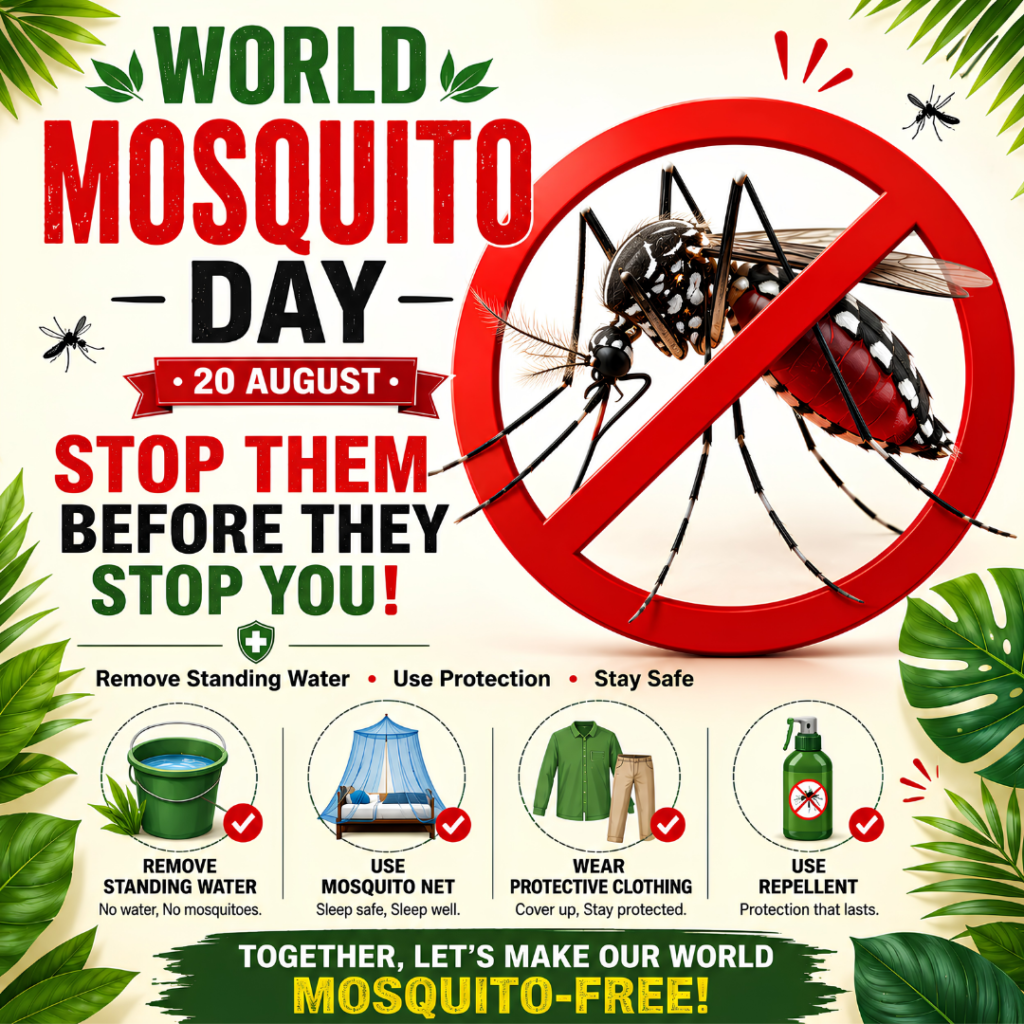
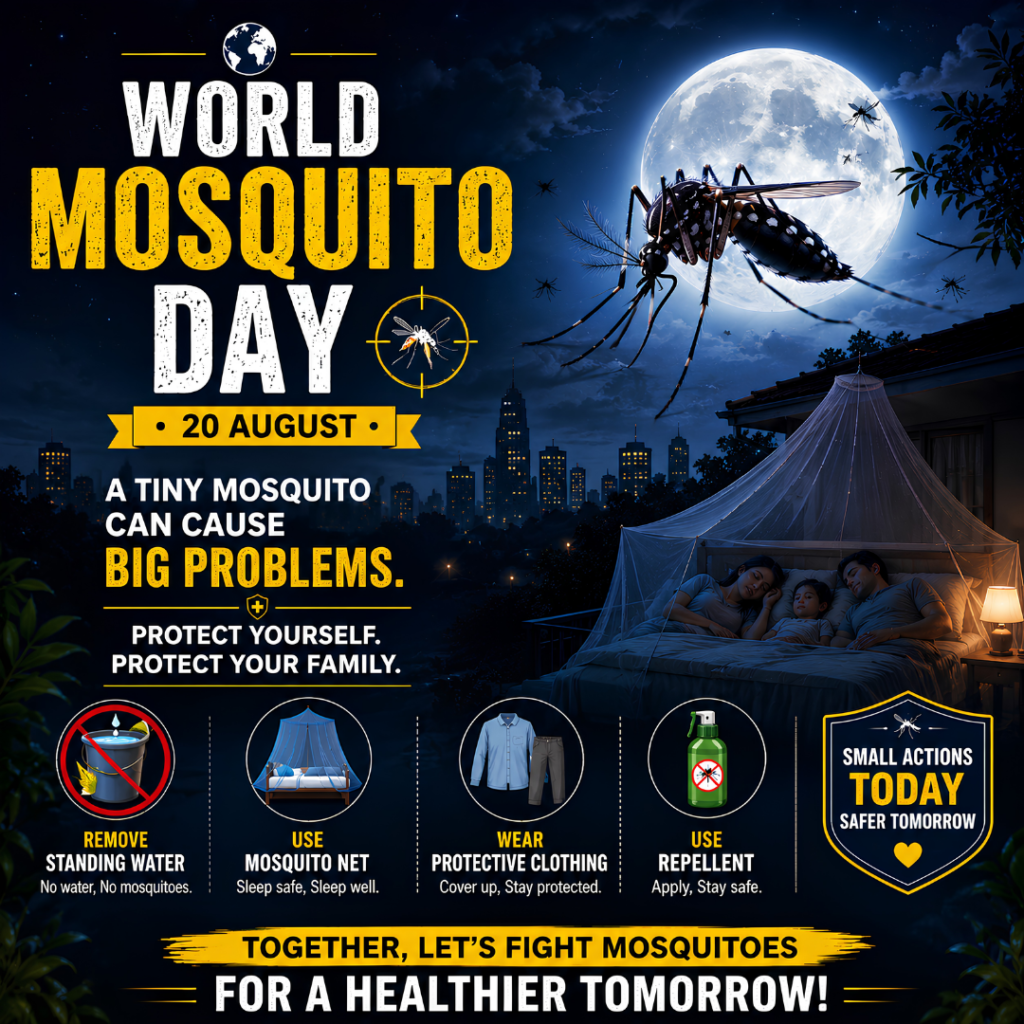
Whether you’re in India or the U.S. these prevention tips apply universally:
| Eliminate Standing Water | Regularly check and empty flower pots, buckets, coolers and other containers where water can collect. |
| Use Mosquito Repellents | Apply EPA-approved (in the U.S.) or ICMR-recommended (in India) mosquito repellents on exposed skin. |
| Install Window and Door Screens | Prevent mosquitoes from entering homes by using proper mesh screens. |
| Wear Protective Clothing | Especially during dawn and dusk wear long sleeves and pants when mosquitoes are most active. |
| Use Mosquito Nets | Particularly effective in malaria-prone regions of India mosquito nets remain a simple yet powerful prevention tool. |
| Maintain Clean Surroundings | Keep gardens, drains and community spaces free from debris and stagnant water. |
| Support Community Fogging and Spraying Programs | Participate in or support local government initiatives aimed at controlling mosquito populations. |
The Role of Climate Change in Mosquito Spread
- Rising global temperatures have expanded the geographic range of mosquitoes allowing them to survive in previously unsuitable climates.
- Increased rainfall and humidity especially in tropical regions like India contribute to longer mosquito breeding seasons.
- In the U.S. warmer winters have allowed mosquito populations to persist longer into the year, increasing exposure risks.
- Experts warn that without stronger climate action mosquito-borne diseases could become even more widespread in the coming decades.
What Governments and Organizations Are Doing
- The World Health Organization (WHO) continues to lead global efforts in malaria elimination and vaccine research.
- India has made significant progress in reducing malaria cases through structured public health campaigns.
- The U.S. CDC conducts continuous surveillance and public awareness programs particularly during peak mosquito seasons.
- Ongoing research into mosquito vaccines, genetically modified mosquitoes and advanced repellents continues to shape the future of prevention.
Final Thoughts
World Mosquito Day is far more than an awareness date on the calendar it’s a global call to action against one of humanity’s oldest and deadliest health threats. Whether you’re in a rural Indian village prone to malaria or a suburban U.S. neighborhood dealing with West Nile Virus concerns the message remains the same: prevention starts at home.
By taking simple steps like removing stagnant water, using repellents and supporting community health initiatives we can all play a part in reducing the impact of mosquito-borne diseases. This World Mosquito Day, let’s honor the scientific breakthroughs of the past by committing to a healthier mosquito-safe future.

Hi I am Vishal Das an Content Creator and blogger created Multiple Website and working as blogger from last 2 years Right Now Working on the website . I have Completed my Schooling from St Xavier’s School Delhi and completed my Graduation from Distance Learning. Please do Join My Facebook page and pinterest Account.